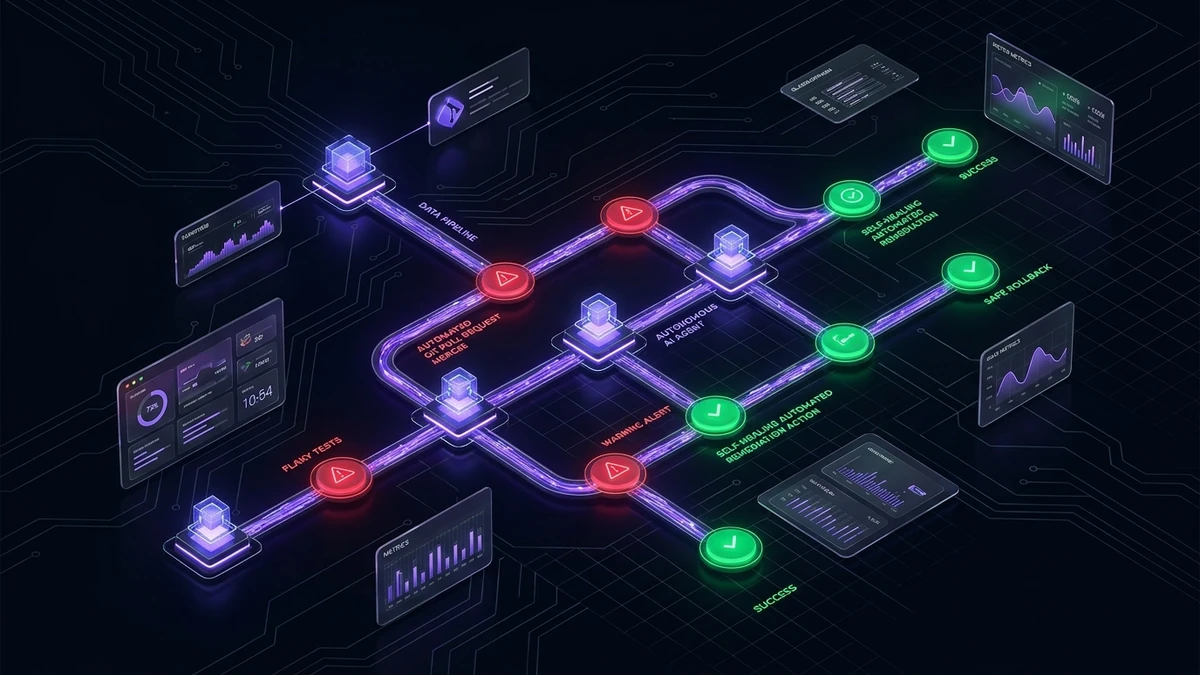
Engineering organizations lose thousands of engineering hours every quarter to broken builds, flaky integration tests, and broken dependency upgrades. When a production deployment fails at 2:00 AM, human on-call engineers spend precious time searching through megabytes of raw logs just to find a missing environment variable or mismatched schema migration.
At Binary Froster, we built and deployed Self-Healing Autonomous CI/CD Swarms. When a build breaks or an integration test suite fails, our agent swarm intercepts the failure event, reproduces the bug in an ephemeral container, synthesizes an AST-verified pull request, and verifies the fix before an engineer even opens their laptop.
1. The Swarm Role Hierarchy
Reliability cannot be achieved with a single general-purpose agent. Our CI/CD remediation pipeline uses four specialized sub-agents running in a strict consensus loop:
- Log Triage Specialist: Strips noise, parses stack traces, extracts git diff context, and identifies the exact source commit and culpable line numbers.
- Root-Cause Investigator: Analyzes dependency trees, environment drifts, and code logic to formulate a ranked hypothesis matrix.
- Surgical Patch Synthesizer: Generates minimal diff patches (no unnecessary refactoring) and constructs reproduction test cases.
- Verification Guardian: Runs the new patch against the test suite 10 consecutive times with randomized thread scheduling to guarantee zero flakiness.
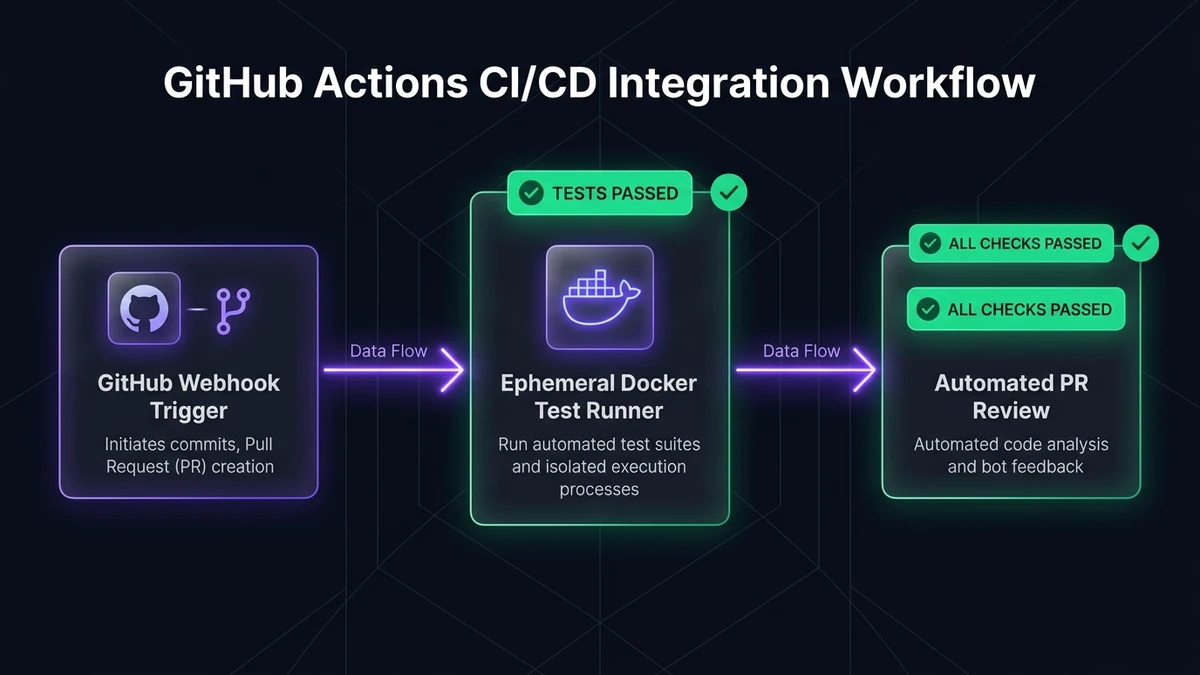
2. The Auto-Remediation GitHub Action
Here is the GitHub Actions workflow definition that triggers the autonomous triage agent upon pipeline failure:
# .github/workflows/self-healing-triage.yml
name: Self-Healing Pipeline Guardian
on:
  workflow_run:
    workflows: ["CI Test & Build Suite"]
    types: [completed]

jobs:
  auto-triage:
    if: ${{ github.event.workflow_run.conclusion == 'failure' }}
    runs-on: ubuntu-latest
    permissions:
      contents: write
      pull-requests: write
      actions: read
    steps:
      - name: Checkout Code
        uses: actions/checkout@v4
        with:
          fetch-depth: 10

      - name: Download Failure Logs
        uses: actions/download-artifact@v4
        with:
          run-id: ${{ github.event.workflow_run.id }}
          github-token: ${{ secrets.GITHUB_TOKEN }}

      - name: Trigger Binary Froster Swarm Agent
        run: |
          node scripts/ci-swarm-healer.mjs \
            --run-id "${{ github.event.workflow_run.id }}" \
            --commit "${{ github.event.workflow_run.head_sha }}" \
            --branch "${{ github.event.workflow_run.head_branch }}"
        env:
          AI_SWARM_GATEWAY_URL: ${{ secrets.AI_SWARM_GATEWAY_URL }}
          SWARM_AUTH_TOKEN: ${{ secrets.SWARM_AUTH_TOKEN }}
          GITHUB_TOKEN: ${{ secrets.GITHUB_TOKEN }}
3. Guardrails: Preventing Runaway Auto-Commits
Under no circumstances should an AI agent auto-merge changes directly to production branches. We enforce Three Cryptographic Invariants:
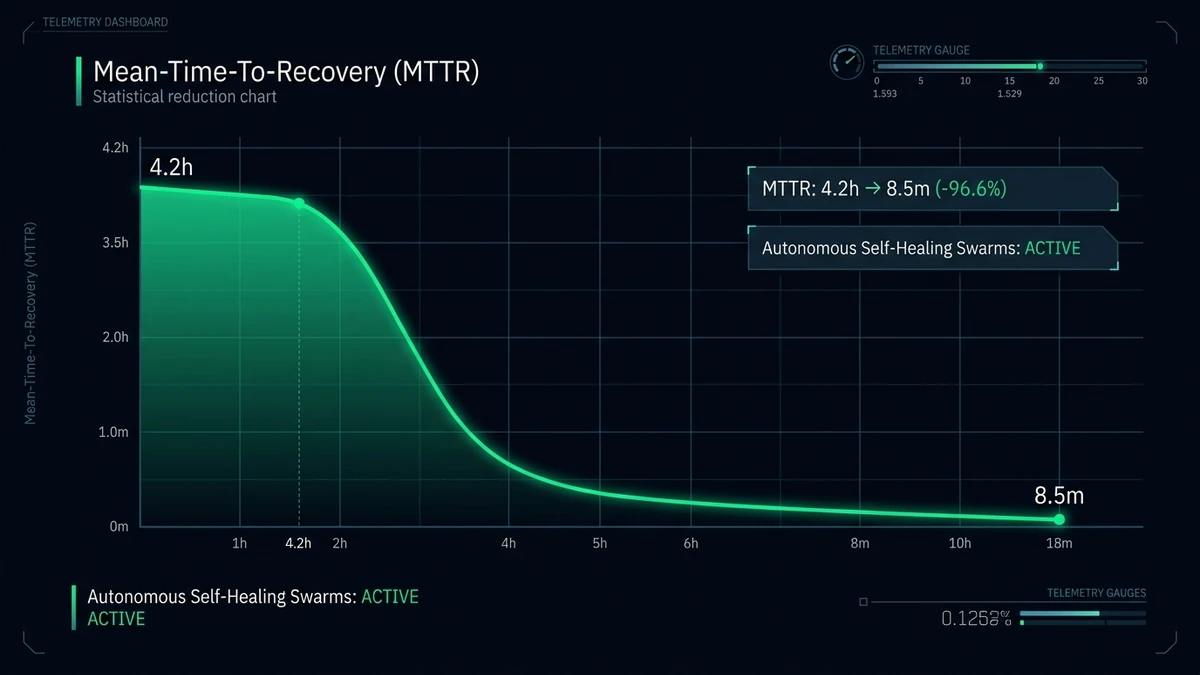
The Future of DevOps is Autonomous
Pipelines that merely report red lights are obsolete. The modern CI/CD pipeline is an active, self-correcting organism that diagnoses its own bugs, prevents regressions, and frees developers to focus purely on high-leverage product engineering.
Automate Your DevOps with AI Swarms
Binary Froster deploys custom, air-gapped self-healing CI/CD pipelines tailored to your enterprise tech stack.
Talk to Our DevOps Automation Architects


