Google's Core Web Vitals have evolved significantly since their 2021 introduction. The retirement of First Input Delay (FID) and its replacement by Interaction to Next Paint (INP) in March 2024 fundamentally changed what "good performance" means — and caught many teams flat-footed. INP measures the latency of every interaction across a page's entire lifecycle, not just the first one.
INP: Why It's Harder Than FID
FID only measured the delay of the very first interaction. INP measures the worst P75 interaction latency across the entire session. A page could pass FID trivially — the user's first click might land between JavaScript tasks — yet fail INP badly because clicking a filter button 10 seconds in triggers a 600ms layout reflow. This means long-running JavaScript tasks anywhere in the component tree become ranking factors.
- INP good: under 200ms per interaction.
- INP needs improvement: 200–500ms.
- INP poor: over 500ms — ranking penalty territory.
Practical Fixes for INP
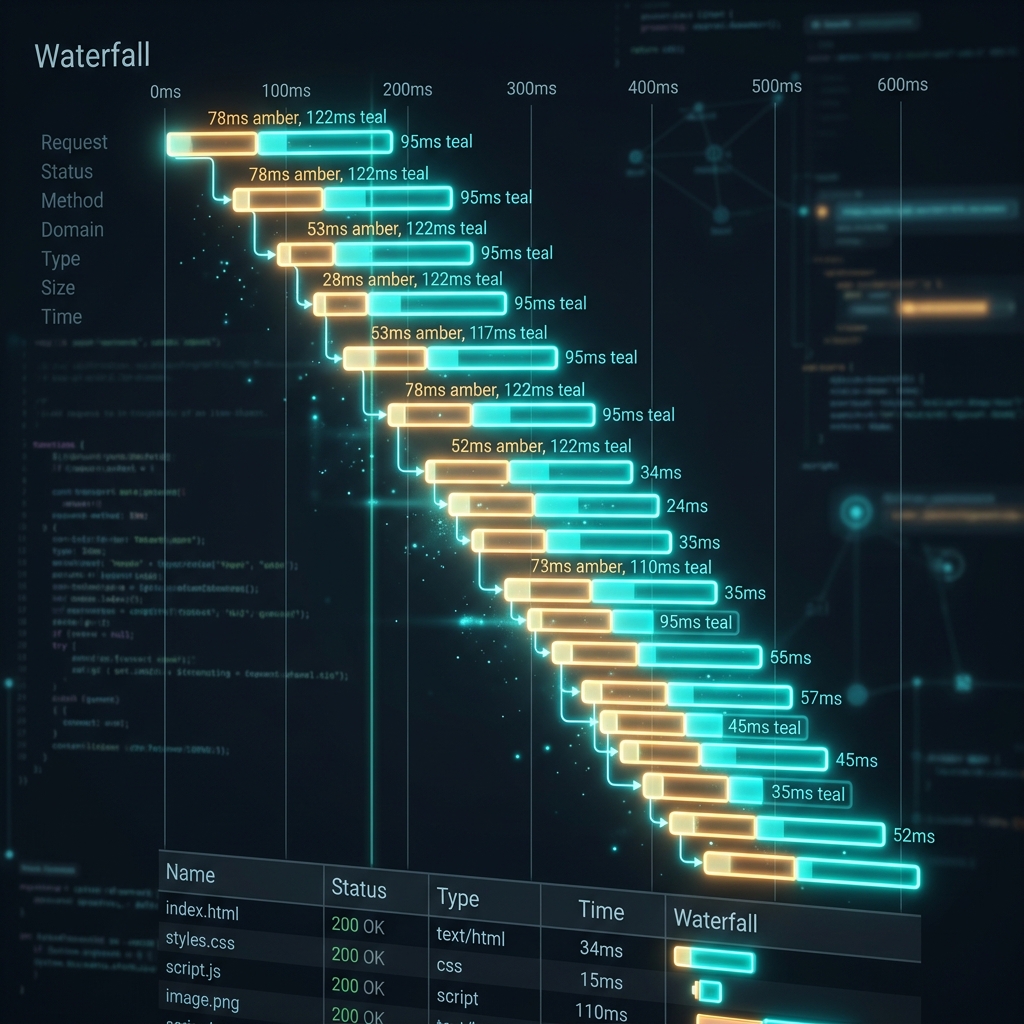
The most common INP culprits in React-based apps are: heavy re-renders triggered by global state updates, synchronous event handlers that do too much work before yielding, and third-party scripts running on the main thread. Start by profiling with Chrome DevTools' Performance panel — sort interactions by duration and find the long tasks (over 50ms).
Deferred processing via scheduler.yield() or wrapping expensive state updates in startTransition() lets React deprioritise non-urgent renders. Moving analytics and chat widgets to a Web Worker via Partytown removes them from the main thread entirely. For Largest Contentful Paint (LCP), ensure your hero image has fetchpriority="high" and is served in AVIF or WebP from a CDN with appropriate Cache-Control headers.
The Business Case
A 100ms improvement in INP correlates with a 0.5–1% improvement in conversion rates — documented across multiple large-scale A/B tests by Google's CrUX team. For a £500k/month e-commerce operation, that's £5,000–£10,000 additional monthly revenue from a purely technical change. Core Web Vitals are no longer an engineering concern — they're a P&L line item.