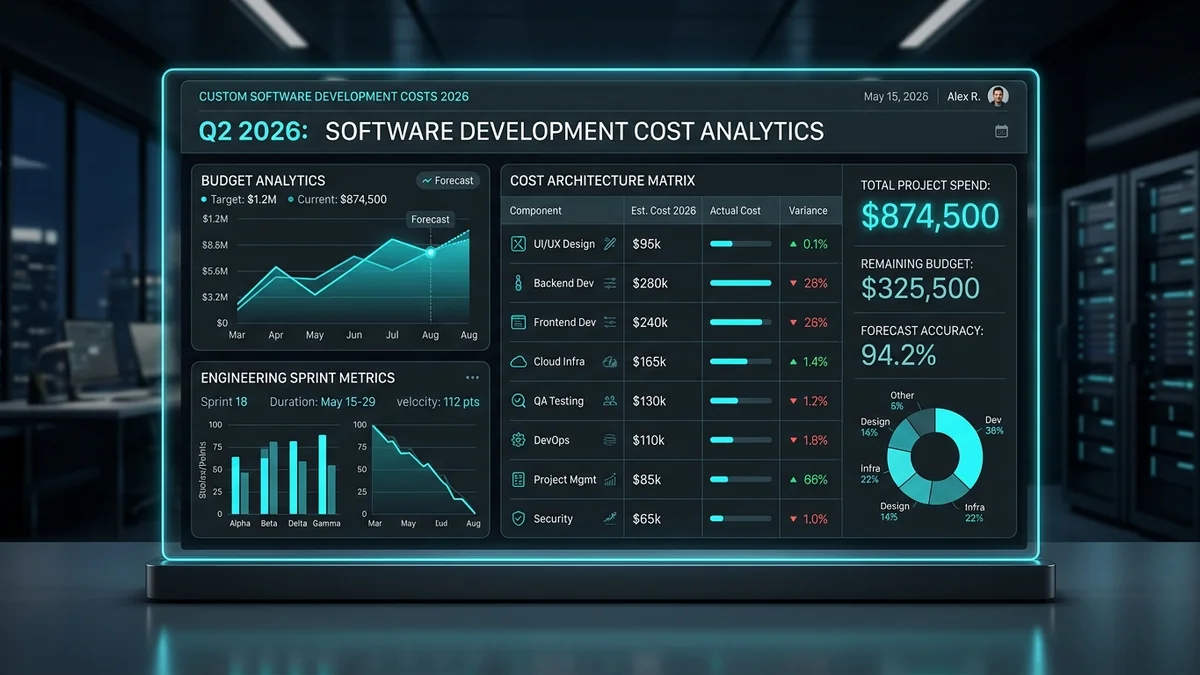
One of the most frustrating experiences for founders and enterprise decision-makers is requesting an estimate for custom software and receiving quotes that diverge by hundreds of thousands of dollars. One agency quotes £8,000 ($10,000); another quotes £95,000 ($120,000) for what seems like the exact same specification.
Direct Answer / Key Takeaway: In 2026, custom software development costs range from $900 (£720 / A$1,368 / ₹76,500) for production web applications and MVPs to $60,000+ (£48,000+ / A$91,200+ / ₹51L+) for enterprise multi-tenant systems. At Binary Froster, transparent fixed-fee sprint pricing starts at $650 (£507 / A$988) for landing pages, $2,800 (£2,184 / A$4,256) for web apps, $2,500 (£1,950 / A$3,800) for headless commerce, $4,900 (£3,822 / A$7,448) for bespoke ERPs, and $4,500 (£3,510 / A$6,840) for mobile apps with 100% intellectual property ownership and zero ongoing licensing penalties across US, UK, Europe, Switzerland, UAE, Australia, and India markets.
In 2026, software development economics have undergone a structural transformation. Modern frameworks like Next.js 16, automated testing pipelines, and developer tooling have drastically compressed build times. However, distributed microservices, multi-region compliance (UK GDPR, US CCPA/HIPAA, Australian Privacy Principles APP / Privacy Act 1988, and India DPDPA 2023), and enterprise AI integrations have increased architectural complexity.
According to research published by The Standish Group CHAOS Report, over 66% of software projects experience budget overruns when billed under traditional hourly time-and-materials arrangements. In this guide, we break down real engineering costs line by line, comparing fixed-fee sprint models against agency billable hours across the UK, US, Australia, India, and global markets.
1. Benchmark Cost Ranges by Project Archetype
Custom software costs are fundamentally dictated by architectural scope, security classification, third-party integrations, and concurrent transaction throughput. Below are verified baseline costs across London, New York, Sydney, and global delivery hubs in 2026:
| Software Archetype | Median Timeline | UK Range (£) | US Range ($) | Australia (A$) | Binary Froster Fixed Fee |
|---|---|---|---|---|---|
| High-Converting Landing Page | 1–2 Weeks | £800 – £2,500 | $1,000 – $3,200 | A$1,500 – A$4,800 | From $650 (£507 / A$988) |
| Custom Web Application / MVP | 3–6 Weeks | £5,000 – £18,000 | $6,500 – $24,000 | A$9,800 – A$36,000 | From $2,800 (£2,184 / A$4,256) |
| Headless E-Commerce Platform | 4–8 Weeks | £7,000 – £25,000 | $9,000 – $32,000 | A$13,500 – A$48,000 | From $2,500 (£1,950 / A$3,800) |
| Bespoke ERP / Internal CRM | 6–12 Weeks | £12,000 – £45,000 | $15,000 – $60,000 | A$22,500 – A$90,000 | From $4,900 (£3,822 / A$7,448) |
| Enterprise AI Chatbot / Agent Workflow | 2–5 Weeks | £8,000 – £28,000 | $10,000 – $35,000 | A$15,000 – A$53,000 | From $2,400 (£1,872 / A$3,648) |
| Cross-Platform Mobile Application | 8–16 Weeks | £15,000 – £55,000 | $20,000 – $70,000 | A$30,000 – A$105,000 | From $4,500 (£3,510 / A$6,840) |
2. The Anatomy of Hidden Software Costs
When evaluating proposals, many organizations look exclusively at upfront build quotes while ignoring the 3-year Total Cost of Ownership (TCO). In software engineering, ongoing operational costs fall into four distinct categories:
- Cloud Infrastructure & Egress: Hosting on AWS or GCP with auto-scaling compute, managed relational databases (RDS PostgreSQL), and global edge CDN caching. Baseline costs range from $50/mo for early-stage web apps to $800+/mo for high-throughput platforms, as documented in the AWS Architecture Pricing Calculator.
- Third-Party API & LLM Token Burn: OpenAI, Anthropic, or Stripe webhook calls. Unchecked LLM token usage can generate unexpected monthly invoices of thousands of dollars if context caching and strict token budgeting are not architected from day one.
- Compliance & Security Audits: Penetration testing, SOC 2 Type II controls, and vulnerability scanning require clean separation of concerns and audit logging.
- Proprietary Licensing Lock-in: Many agencies build on top of closed-source proprietary CMS engines or private libraries, effectively holding your code hostage and charging recurring monthly "platform maintenance fees."
3. Fixed-Fee Sprints vs. Hourly Billing: The Economic Comparison
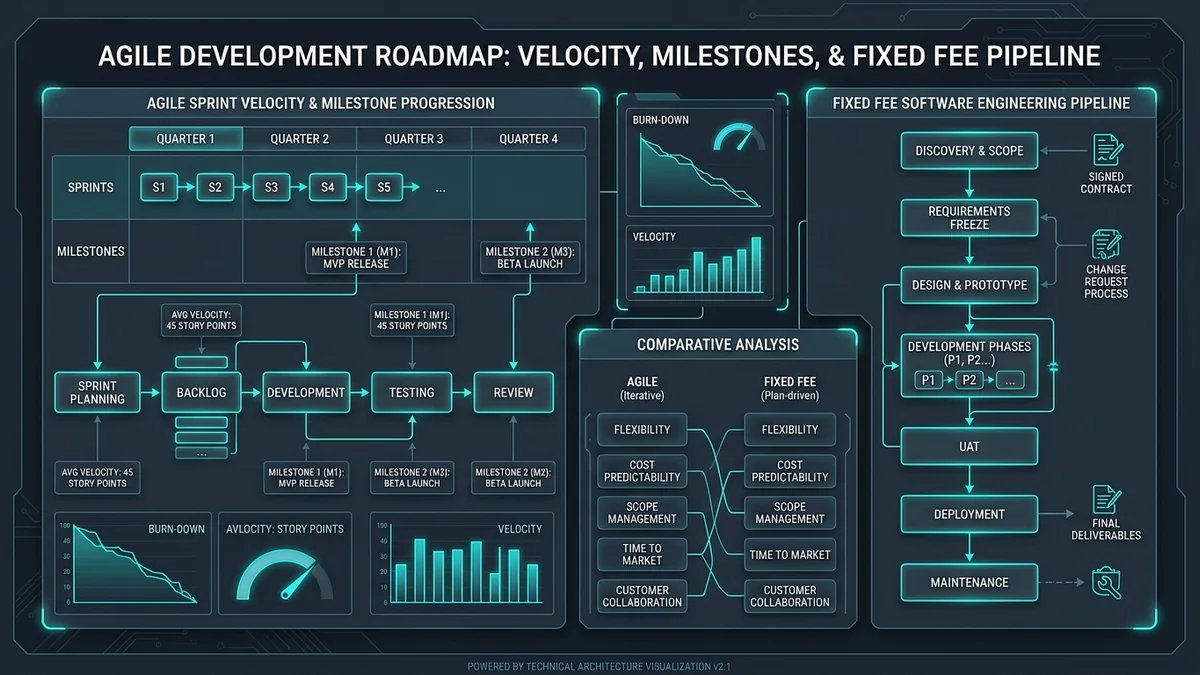
The traditional agency model is built on billable hours ($100–$250/hour in London and New York). Under hourly billing, the agency's commercial incentive is misaligned with the client's goal: the longer the engineers take, the more revenue the agency generates. In contrast, milestone-driven fixed-fee sprints enforce strict scope boundaries, predictable cash flow, and 100% intellectual property transfer upon delivery.
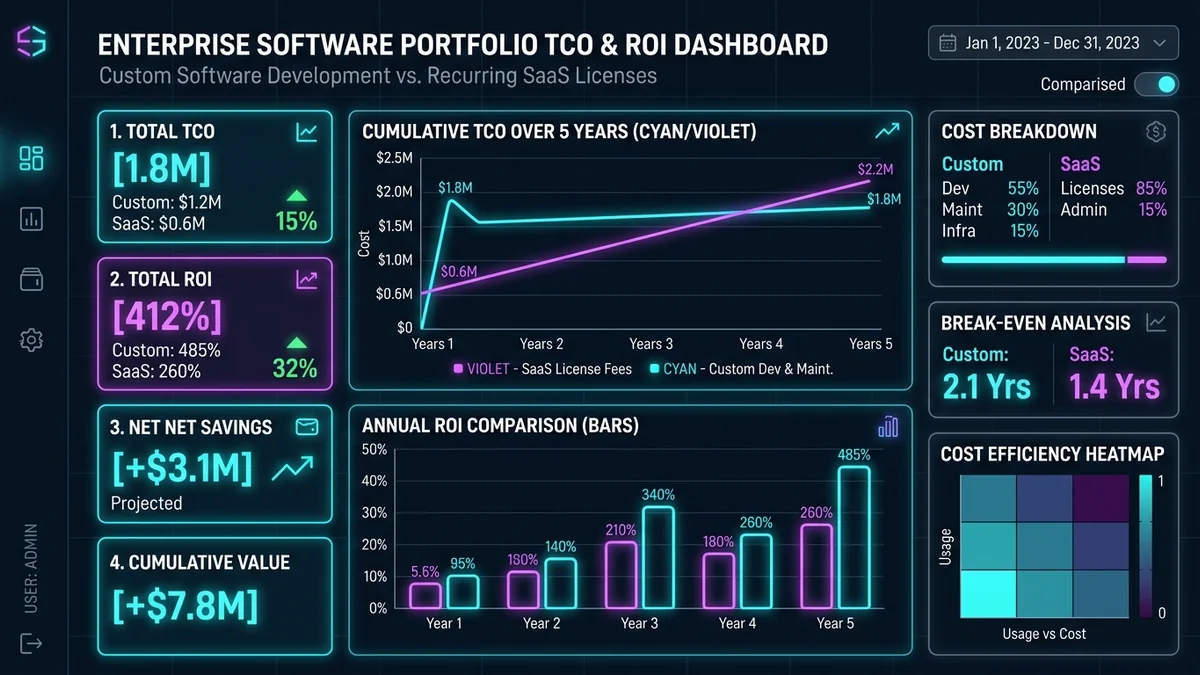
At Binary Froster, all engineering engagements are executed as milestone-driven sprints with published transparent pricing. Clients retain full source code repository ownership with zero recurring vendor licensing penalties.
Calculate Your Exact Project Budget
Plan your custom software build with 100% intellectual property ownership and zero surprise overages. Explore our published pricing tiers across USD ($), GBP (£), and INR (₹).


