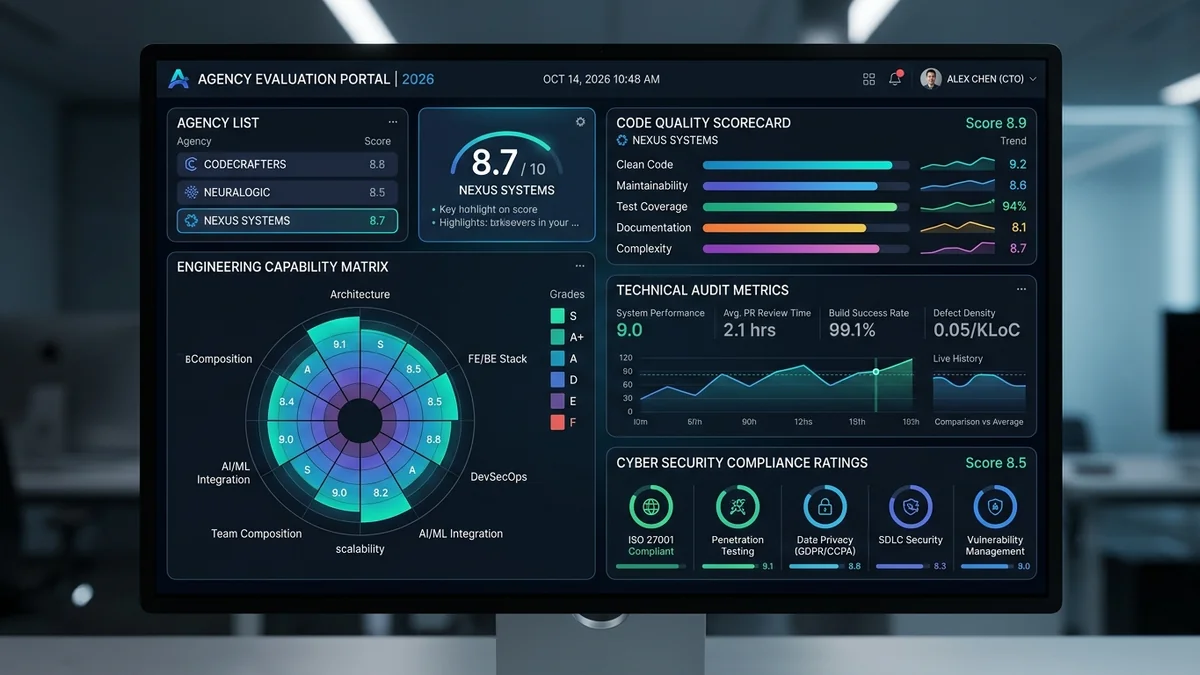
Selecting the wrong software development agency is one of the costliest mistakes an organization can make. The immediate financial loss of a botched build is painful, but the secondary costs — six to twelve months of lost market opportunity, burned customer trust, and rewriting brittle spaghetti code from scratch — can be lethal to a growing business.
Direct Answer / Key Takeaway: To select the best software development agency in 2026, vet eight criteria: (1) 100% written IP and source code assignment, (2) direct access to senior engineers without non-technical account manager buffers, (3) modern open stacks (Next.js 16, TypeScript, PostgreSQL), (4) automated CI/CD test coverage, (5) transparent fixed-fee milestone pricing, (6) verified live production URLs with interactive demo sandboxes, (7) OWASP Top 10 and GDPR/SOC2 security hardening, and (8) post-launch warranty SLAs.
According to the ThoughtWorks Technology Radar and industry software quality benchmarks, over 40% of agency-delivered codebases require fundamental architectural refactoring within their first 18 months due to inadequate typing, missing automated tests, or heavy reliance on abandoned third-party plugins.
The 8 Non-Negotiable Vetting Criteria
1. 100% Intellectual Property (IP) Ownership in Writing
Never sign an agreement where the agency retains ownership of underlying source code, proprietary libraries, or repository access. Your contract must explicitly specify that upon milestone payment, all copyrights, patents, and trade secrets transfer unconditionally to your company.
2. Direct Senior Engineer Communication
Traditional legacy agencies place non-technical account managers between you and the developers. Requirements become distorted like a game of telephone. High-performing modern studios connect clients directly with the principal architects and senior engineers actually writing the code.
3. Open-Source, Modern Tech Stacks
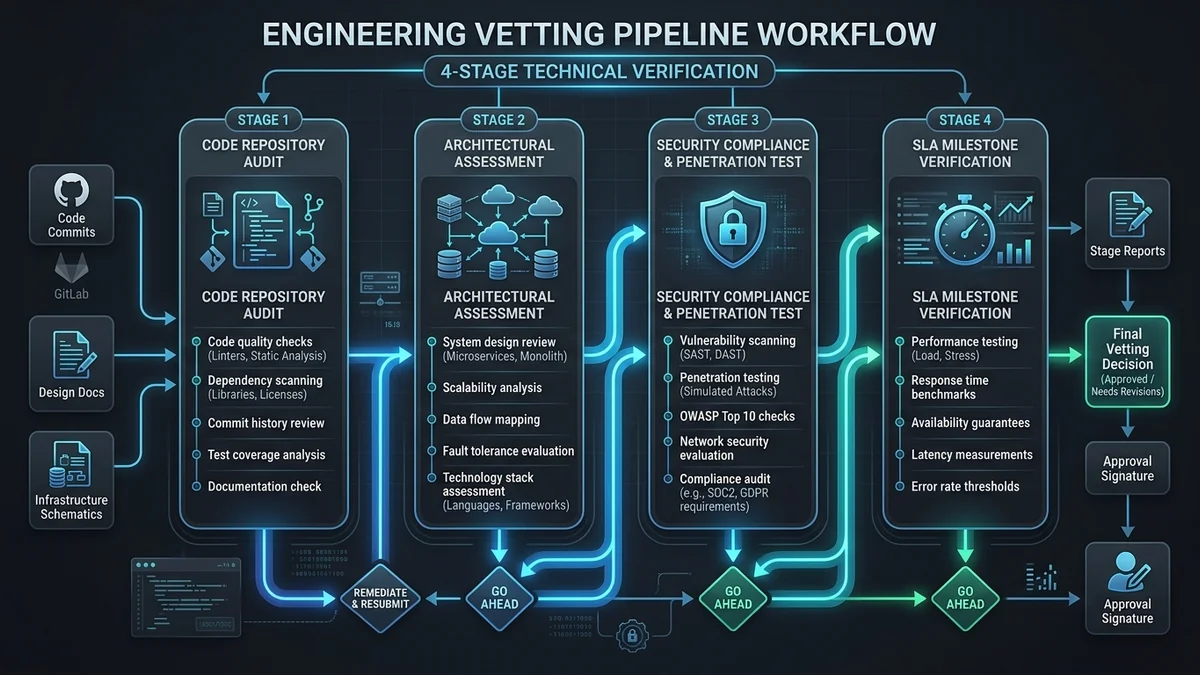
Beware agencies insisting on legacy proprietary platforms or niche monolithic CMS solutions. In 2026, the gold standard for web and enterprise software is open-source, portable, and broadly adopted: Next.js 16, React 19, TypeScript, PostgreSQL, and standard cloud containers. If you ever part ways with the agency, any competent engineering team globally can maintain an open-source TypeScript codebase.
4. Comprehensive Automated Testing & CI/CD Pipelines
Ask to inspect an agency's automated test coverage. Production-grade software requires unit tests, integration tests, and end-to-end regression validation run via GitHub Actions or automated CI runners. Without automated tests, every new feature risks breaking existing functionality.
5. Transparent, Milestone-Driven Pricing
Insist on fixed sprint deliverables tied to specific acceptance criteria. When scope is clear, professional engineering teams can commit to definitive timelines and fixed budgets.
6. Verified Live Portfolio & Client Telemetry
Don't settle for static Figma screenshots. Demand interactive live demos, verified URLs, and measurable client results. Look for production case studies such as Binary Froster's delivered client platforms with live demo sandboxes.
7. Security & Compliance Hardening
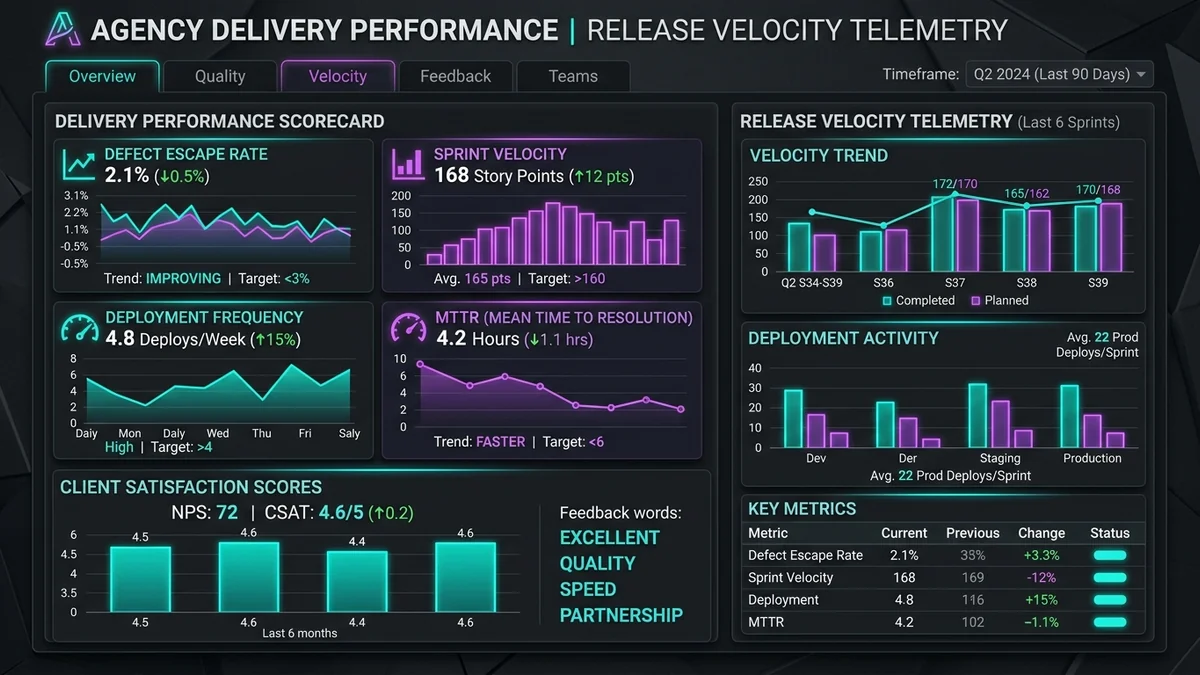
Ensure the team implements OWASP Top 10 security safeguards, CSRF protection, SQL injection prevention via parameterized queries, encrypted environment secret handling, and Content Security Policies (CSP).
8. Post-Launch Warranty & Maintenance Support
Software is a living system. A reliable partner provides a post-launch warranty period for defect remediation and offers structured maintenance retainers for continuous feature updates.
Ready to hire an engineering-led agency?
Binary Froster builds custom software with 100% IP ownership. Let's discuss your project.
Get a Free Consultation


