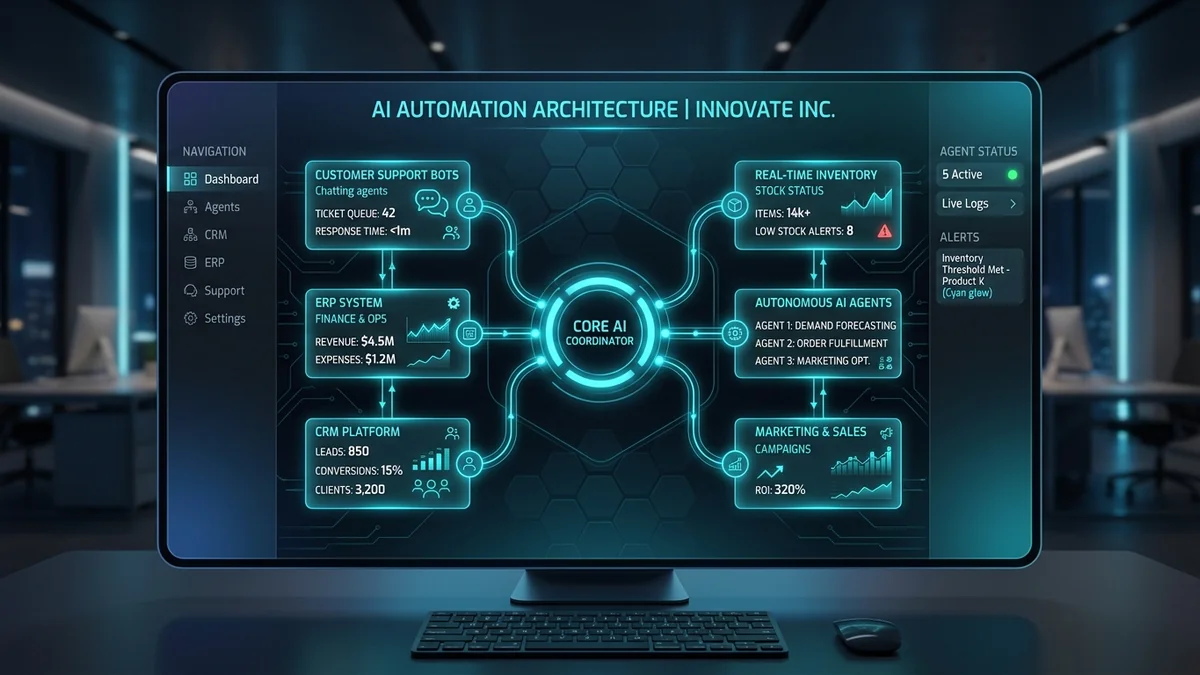
Artificial intelligence is no longer the exclusive preserve of Silicon Valley tech giants with billion-dollar compute clusters. In 2026, small and medium enterprises (SMEs) are leveraging generative AI to automate customer triage, extract structured data from unstructured invoices, and provide personalized 24/7 client consultations.
Direct Answer / Key Takeaway: Small businesses should integrate AI using Retrieval-Augmented Generation (RAG) rather than fine-tuning models. RAG grounds LLMs in company documents stored in PostgreSQL with pgvector, ensuring 100% cited facts with zero hallucinations. Production implementations require prompt caching to cut token bills by 80%, temperature limits (0.1–0.3), and strict data isolation. Binary Froster architects turnkey SME AI workflows starting from $2,400 (£1,872).
However, haphazardly wrapping a public OpenAI API prompt inside a website widget is a recipe for hallucinations, compliance violations, and runaway API bills. According to the NIST AI Risk Management Framework, over 55% of enterprise AI pilots fail to reach production due to a lack of deterministic guardrails and security boundary controls.
1. RAG vs. Fine-Tuning: Making the Right Architectural Choice
The most common architectural mistake SMEs make is assuming they need to "train" or "fine-tune" their own AI model. Fine-tuning is computationally expensive ($10,000–$50,000+), creates static models that quickly become outdated, and risks catastrophic forgetting.
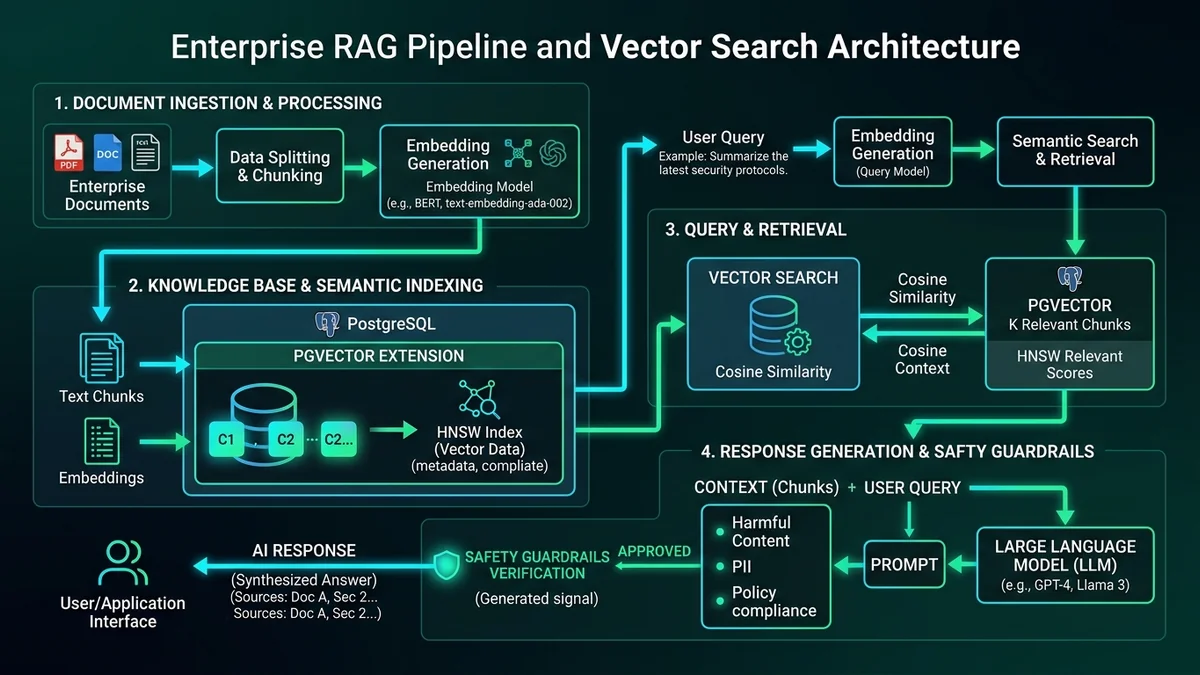
In 95% of small business use cases, Retrieval-Augmented Generation (RAG) is the superior paradigm:
- Real-Time Freshness: Update your product catalog, policy PDF, or knowledge base instantly without retraining.
- Source Citation: RAG forces the LLM to ground answers in retrieved text chunks with direct source references.
- Data Isolation: Internal company proprietary data remains securely stored in your private PostgreSQL database using
pgvector.
2. High-Impact SME AI Workflows in 2026
Automated Lead Qualification & Scheduling
AI chatbots parse inbound prospect inquiries, evaluate project fit against company criteria, calculate preliminary ballpark pricing, and book calendar slots automatically.
Financial Invoice & PO Extraction
Multimodal vision models ingest scanned PDF bills, extract line-item totals and tax numbers with 99.8% precision, and push structured JSON into internal ERP accounting modules.
3. Guardrails, Context Caching, and Token Budgeting
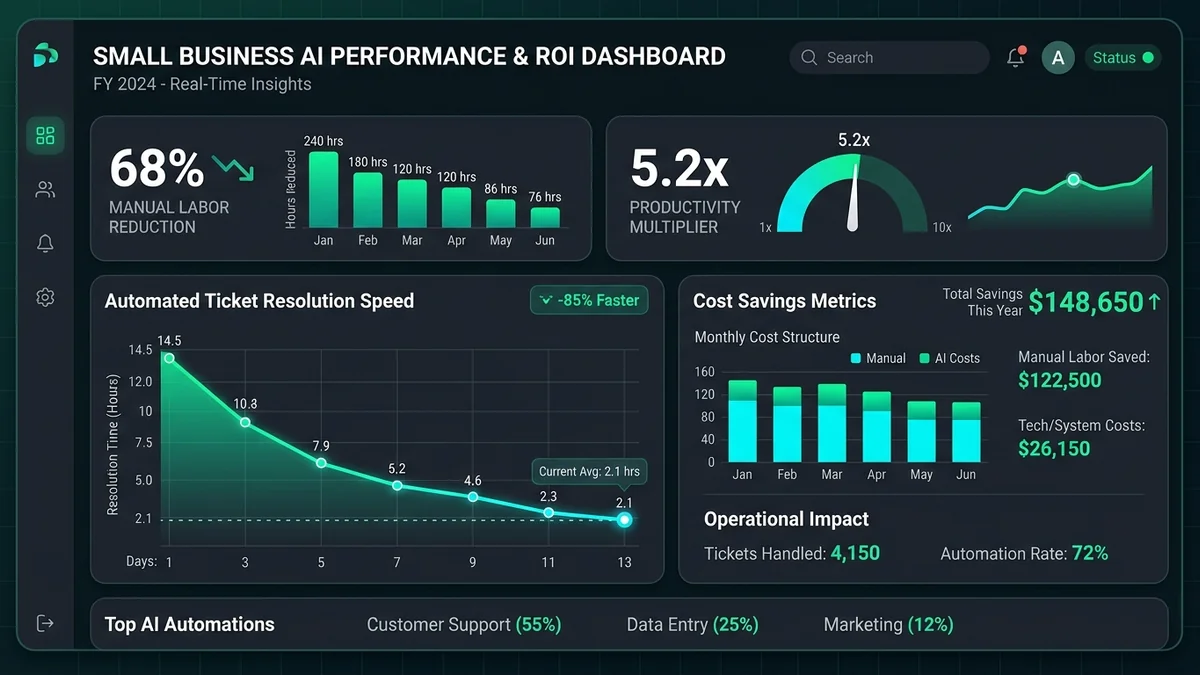
Deploying AI into client-facing applications requires strict token budgeting and guardrails. Utilizing prompt caching reduces recurrent token consumption costs by up to 80% on leading model APIs (OpenAI and Anthropic), while semantic circuit breakers immediately terminate runaway conversational loops.
Integrate Production-Ready AI Into Your Business
Binary Froster architects custom AI chatbots, autonomous agent pipelines, and enterprise RAG solutions tailored for SMEs. Fixed milestone delivery starting from $2,400 (£1,872).


